
Mistakes That Lead to Wrong Diagnoses
Meet Sarah.
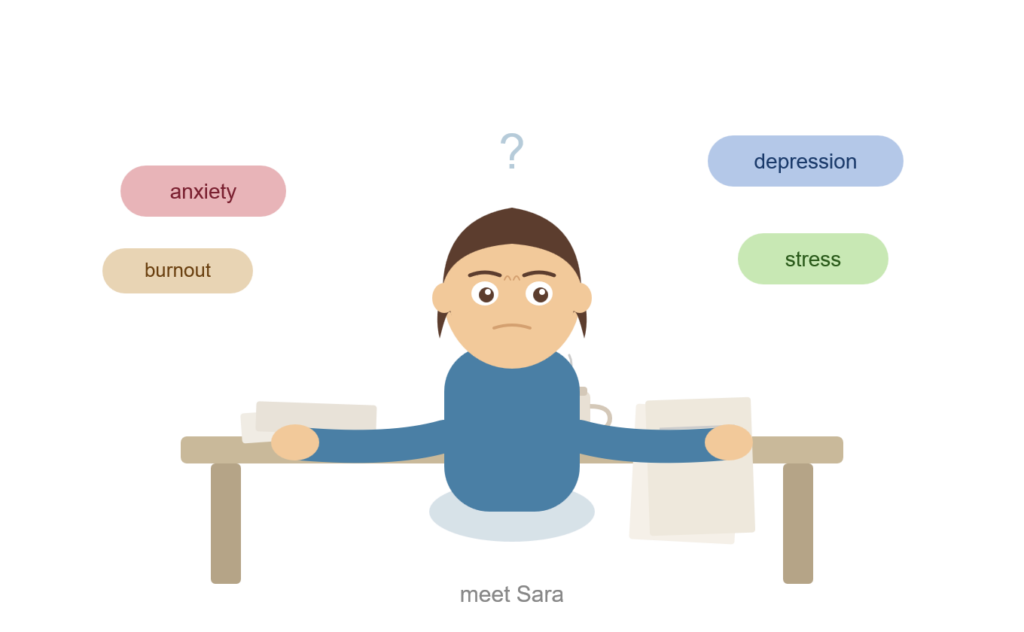
For years, Sarah was told she had anxiety. Then depression. Then both.
Nobody asked about her school reports, her lifelong disorganisation, or the fact that she’d been working twice as hard as everyone around her just to keep up. ADHD misdiagnosis stories like hers are not rare. They are the norm. If you’ve ever left a diagnosis appointment feeling unseen, this guide is for you.
Disclaimer: The information in this article is for general guidance only and does not constitute medical advice. Always consult a qualified clinician about your own or your child’s health and do not make changes to treatment based solely on what you read here.
Key Takeaways:
- ADHD misdiagnosis is common, especially in adults, women, and inattentive presentations
- The most frequent wrong labels are anxiety, depression, autism, stress, and burnout
- ADHD and these conditions can also genuinely co-occur — one doesn’t rule out the other
- A good assessment looks at the whole picture across a person’s lifespan, not just now
- If your diagnosis doesn’t feel complete, a formal ADHD review is worth pursuing
Why ADHD Is So Often Misdiagnosed
Before looking at specific conditions ADHD is confused with, it helps to understand why ADHD misdiagnosis is so common in the first place.
Most people seeking help start with their GP. A typical appointment is ten minutes. In that time, a clinician must identify what is most immediately distressing, which is usually mood, anxiety, or sleep. The lifelong pattern of attention difficulties, disorganisation, and executive dysfunction often never gets asked about, because it doesn’t present itself urgently in the way that low mood or panic does.¹
Training in adult ADHD across UK primary care remains limited. A qualitative study of UK adult females found that limited understanding and lack of empathy among healthcare professionals was one of the most commonly reported barriers to accurate diagnosis.² Many participants felt their symptoms were misunderstood at the GP stage, leading to years of misdiagnosis before reaching a specialist.
Gender bias adds another layer. The diagnostic criteria were built largely around hyperactive presentations in boys. Women and girls with inattentive ADHD spend decades collecting labels like anxious, too sensitive, or disorganised before anyone considers ADHD as the underlying cause. A detailed look at these differences is covered in our guide to ADHD differences in men vs women.
Co-occurring conditions make the picture more complex still. When anxiety, depression, and autism all share features with ADHD, and can also genuinely exist alongside it, even well-intentioned clinicians can follow the wrong thread. The result is an ADHD misdiagnosis, or more often a partial diagnosis that treats one part of the picture while leaving the rest untouched.
You may also have heard the argument that ADHD is being handed out too freely. It’s worth separating that concern from the reality of misdiagnosis. We unpack what the evidence actually shows in our guide to is ADHD overdiagnosed.
Also, if you’ve never been screened for ADHD but recognise these patterns, our complete checklist of ADHD signs in women is a useful starting point.
ADHD vs Anxiety: Symptom Overlap That Leads to Wrong Labels
Anxiety is the most common condition that ADHD is confused with. Understanding why requires looking at how similar they can appear on the surface.
ADHD or anxiety? Understanding the difference
ADHD and anxiety are distinct conditions.
- ADHD involves lifelong difficulties with attention, impulse control, time management, and executive function.
- Anxiety involves persistent worry, fear, and physical symptoms such as a racing heart, tension, and dread.
Still, the overlap is real. Both can produce restlessness, racing thoughts, trouble sleeping, and difficulty concentrating. The key clinical distinction is this: in ADHD, attention difficulties are present even when the person is calm. They show up across all settings and moods. In anxiety, concentration typically improves once the worry subsides. If focus has always been inconsistent regardless of mood, ADHD is worth exploring.¹
Consider someone whose constant fidgeting and mind-wandering is labelled as generalised anxiety. Nobody asks about their school reports, full of “bright but easily distracted.” Therapy helps with the worry. But the disorganisation and inability to start tasks remains, because those were never anxiety to begin with.
Common mistakes that lead to an anxiety-only diagnosis
The most common error is focusing only on physical anxiety symptoms such as palpitations and tension, without asking about lifelong attention or organisation difficulties. Another is assuming all restlessness and racing thoughts equal anxiety, without exploring whether hyperactivity or impulsivity might be involved.
If your anxiety treatment has helped you worry less but hasn’t changed your ability to plan, start tasks, or manage time, ADHD may still be part of the picture.
Our article on untreated ADHD in adults explains that the consequences of missing ADHD while treating only the anxiety that developed around it can accumulate for years.
ADHD vs Depression: Low Mood or Executive Dysfunction?
Anxiety isn’t the only condition ADHD gets confused with. Depression is another common destination for people whose real struggle lies with focus and follow-through.
Many adults with ADHD arrive at a clinician presenting with exhaustion, low self-worth, and a sense of failure. After years of underachieving relative to their potential, missing deadlines, and receiving criticism for things that feel beyond their control, low mood is a natural result. A clinician focused on the depression may never ask why life has been such a grind in the first place.²
ADHD or depression? Why the line can blur
Depression involves persistent low mood, loss of interest, changes in sleep and appetite, and feelings of hopelessness that persist across situations. ADHD-related emotional dysregulation tends to be faster and more reactive: intense frustration when a task feels impossible, or sudden overwhelm that lifts when circumstances change.
When ADHD or depression is the question, the timeline is revealing. ADHD is lifelong. The attention difficulties and disorganisation will be visible in childhood if you look. Depression typically has an onset. If difficulties with focus, planning, and follow-through predate any episode of low mood, ADHD is likely part of what’s driving the picture.³
ADHD and depression together
ADHD and depression frequently co-occur, and this is where diagnosis becomes most complicated. Treating only the depression without addressing the ADHD underneath it is one of the most frequently repeated misdiagnosis patterns.
Research confirms the link: adults with ADHD have significantly higher rates of depression than the general population, often as a direct consequence of chronic stress, repeated failure, and self-blame that untreated ADHD produces.³
The ADHD and depression symptoms that overlap most, including low energy, poor concentration, and difficulty motivating, are the ones most likely to be attributed to depression alone. Treating ADHD and depression together, when both are present, typically produces better outcomes than treating either in isolation.
ADHD and Autism: Where Confusion and Misdiagnosis Happen
Beyond anxiety and depression, ADHD is also frequently confused with autism, and vice versa, because some traits can look surprisingly similar on the surface.
Both are neurodevelopmental conditions that can involve social difficulties, sensory sensitivities, executive function challenges, and emotional dysregulation. Misdiagnosis happens when a clinician looks for one label and stops once they find it, even when both conditions are present.
Can you have ADHD and autism?
Yes. ADHD and autism can and frequently do occur together. Research estimates that around 37 to 40% of autistic individuals also have ADHD.⁴ This combination is sometimes referred to as AuDHD. When autism and ADHD together are present, the clinical picture is more complex than either condition alone, making misdiagnosis considerably more likely.
Our article on ADHD and autism covers what co-occurrence looks like and how to navigate assessment when both conditions may be present.
Are ADHD and autism related or the same?
ADHD and autism are not the same condition.
What is ADHD and autism, separately? ADHD primarily involves difficulties with attention regulation, impulse control, and executive function. The attention is inconsistent and interest-driven. Autism primarily involves differences in social communication, a preference for predictability and routine, restricted or intensely focused interests, and sensory processing differences.
What’s the difference between autism and ADHD in practice? Three misdiagnosis scenarios are worth naming.
- First, a person with ADHD and social anxiety may be mislabelled as autistic because social difficulties are visible while attention difficulties are not.
- Second, an autistic person with strong focus on specific topics may appear not to have ADHD, even when attention difficulties exist elsewhere.
- Third, and most commonly, a person with both conditions receives only one diagnosis because the clinician stopped looking after finding the first.
Are ADHD and autism related genetically? Yes, they share significant genetic overlap, which is part of why co-occurrence is so common.⁴
Common ADHD Misdiagnosis Routes
Even beyond anxiety, depression, and autism, there are other ways ADHD gets mislabelled or brushed aside entirely.
Some people are never given any clinical label at all. They are told they are lazy, disorganised, or emotionally unstable. Others receive broader labels: stress, burnout, or personality issues. And for many women, symptoms are attributed to hormones or age without anyone asking whether ADHD was present long before perimenopause began.
Stress, burnout, and personality labels
Working twice as hard as everyone around you to produce the same output is exhausting. Over time, that exhaustion looks like burnout, and burnout looks like stress, which clinicians can treat without ever asking why the person was running at that level of effort in the first place.
Unrecognised ADHD is a significant driver of chronic burnout. When the brain’s executive system is constantly overloaded without support, the inevitable result is collapse. That collapse gets called burnout, or a personality characteristic such as being someone who “can’t cope with pressure.” Being told it’s your personality closes the door on assessment before the person has even reached it.
Hormones, menopause, and misdiagnosis in women
For women in midlife, a specific misdiagnosis route exists that can delay recognition by years. As oestrogen declines during perimenopause, ADHD symptoms that were previously managed through coping strategies can suddenly become unmanageable. The woman is told it’s her age. Or her hormones. Or menopause. All of those things may be true. But if the attention difficulties, disorganisation, and emotional dysregulation were present long before perimenopause, ADHD is also part of the picture.
Our guide on ADHD and menopause covers this intersection in detail, including what perimenopause does to the ADHD brain and how to approach assessment in midlife.
What a Good ADHD Assessment Should Include
Understanding the mistakes is important, but the real solution is making sure any ADHD assessment is thorough enough to avoid those pitfalls in the first place.
A good assessment looks at the whole person across their whole life. It actively screens for anxiety, depression, autism, trauma, and learning difficulties alongside ADHD, because the presence of one condition does not rule out the others. It includes a detailed developmental history, symptom checklists across different settings, and collateral information where possible, such as school reports or previous clinical letters.¹
Brief assessments based only on rating scales, or appointments focused solely on current distress, are most likely to produce misdiagnosed ADHD or missed diagnoses. A wrong ADHD diagnosis almost always comes from an incomplete picture.
If you have concerns about a previous diagnosis or have never been assessed for ADHD despite a long history of relevant difficulties, our adult ADHD assessment provides a detailed clinical report covering how ADHD affects your daily functioning, with specific attention to co-occurring conditions and how ADHD presents in women. Appointments are available within the same week in many cases, and that report is far more useful than a brief GP letter when it comes to understanding what’s actually going on.
How to Tell If Your Diagnosis Might Be Wrong
If you already have a diagnosis but it doesn’t quite fit, it’s worth asking whether something has been missed, including ADHD. Feeling half-diagnosed is more common than clinicians acknowledge.
Red flags that you may have been misdiagnosed
Several signs suggest a diagnosis may be incomplete or incorrect. Your assessment was very brief, with minimal history taken. Your diagnosis was based on one symptom cluster without exploration of other possibilities. Treatment has helped your mood or anxiety but has not changed your ability to focus, plan, or organise. You relate strongly to descriptions of ADHD despite having a different label. Feedback from your assessment felt rushed or dismissive. Your difficulties have been lifelong but the diagnosis focuses only on recent events.
None of these alone confirms misdiagnosed ADHD. But any combination is worth taking seriously, not as a reason to abandon existing treatment, but as a reason to seek a more complete picture.²
Start by keeping a symptom diary across several weeks. Gather old school reports, work reviews, and any previous clinical letters. Ask your GP specifically about ADHD assessment. If you’ve been waiting a long time on an NHS list, the Right to Choose pathway may allow you to access an assessment through a CQC-regulated provider without further referral.
If you’re weighing up concerns about both missed diagnoses and overdiagnosis, it helps to see what the research says about ADHD overdiagnosis before concluding your own situation.
Frequently Asked Questions
Can ADHD be misdiagnosed as anxiety or depression?
Yes, and it happens frequently. When anxiety or depression is the presenting complaint, clinicians often treat what they can see without exploring whether a lifelong pattern of attention and executive function difficulties underlies it. ADHD or anxiety can look nearly identical on the surface, particularly in adults with inattentive presentations. The key is whether attention difficulties are present even when the person is calm. If they are, ADHD warrants investigation alongside any anxiety or depression treatment.
Can you have ADHD and autism at the same time?
Yes. ADHD and autism are distinct conditions but they frequently co-occur. Research estimates that around 37% of autistic people also have ADHD.⁴ Misdiagnosis happens when a clinician identifies one condition and stops looking, missing the other entirely. Neither diagnosis excludes the other, and both may need to be addressed for treatment to be effective.
How do I know if my ADHD diagnosis is wrong?
The clearest indicators are a persistent mismatch between your diagnosis and your lived experience, treatment that helps some symptoms but leaves focus, organisation, and follow-through unchanged, and an assessment that felt brief or incomplete. Having another label, such as anxiety or depression, does not mean ADHD has been ruled out. If any of these apply, seeking a formal review is reasonable. You can book an ADHD assessment review without a GP referral.
References
[1] National Institute for Health and Care Excellence (2018). Attention deficit hyperactivity disorder: diagnosis and management. NICE guideline NG87. Available at: https://www.nice.org.uk/guidance/ng87
[2] Wills, V. and Chakraborty, R. (2026) A qualitative study on the experiences of adult females with late diagnosis of ASD and ADHD in the UK. Healthcare, 14(2), Article 209. https://doi.org/10.3390/healthcare14020209
[3] Kessler, R.C. et al. (2006) The prevalence and correlates of adult ADHD in the United States: results from the National Comorbidity Survey Replication. American Journal of Psychiatry, 163(4), pp. 716-723. https://doi.org/10.1176/appi.ajp.163.4.716
[4] Rong, Y. et al. (2021) Prevalence of attention-deficit/hyperactivity disorder in individuals with autism spectrum disorder: a meta-analysis. Research in Autism Spectrum Disorders, 83, Article 101759. https://doi.org/10.1016/j.rasd.2021.101759