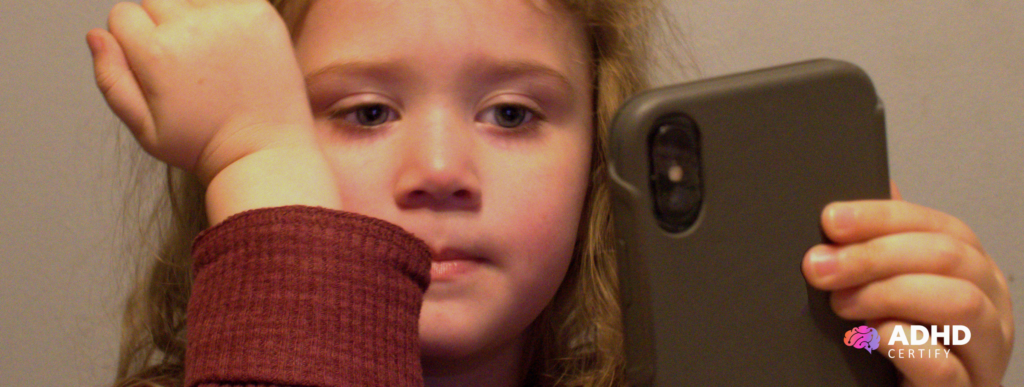
If you have ADHD and feel like your phone is impossible to put down, you are not imagining the connection. Research consistently finds associations between ADHD symptoms and problematic phone use. ADHD phone addiction is a phrase many adults with ADHD recognise in themselves, even if the clinical reality is more nuanced than the label suggests. This article explains the connection, what it looks like, and what actually helps.
Key Takeaways
- If longstanding ADHD symptoms, including difficulty concentrating, impulsivity, time management difficulties, or emotional regulation difficulties, are also present and have not been assessed, an private ADHD assessment for adults may help clarify what is contributing to the pattern and what support may be appropriate.
Research finds associations between ADHD symptoms and problematic smartphone use, but this is not the same as causation - Several ADHD-related mechanisms including novelty-seeking, avoidance, time blindness, and emotional regulation may contribute
- High phone use is not the same as addiction; the question is whether it is causing meaningful distress or impairment
- If phone use is linked with significant distress or affecting functioning, GP or mental health support is worth seeking
Does ADHD cause phone addiction?
ADHD phone addiction is a common self-description, but the relationship is more accurately described as an association than a direct cause. Studies have found that ADHD symptoms are associated with higher rates of internet addiction and problematic smartphone use.¹ Adults with ADHD symptoms report more difficulty controlling phone use and experience more negative consequences from it than those without ADHD.²
This association does not mean ADHD automatically leads to phone addiction, or that everyone with ADHD will struggle with phone use. It does suggest that the same neurological features that characterise ADHD, including novelty-seeking, impulsivity, difficulty with delayed rewards, and emotional regulation challenges, can make some people with ADHD more vulnerable to phone use becoming difficult to manage.
ADHD and phone addiction are related but not the same thing. Problematic phone use refers to a pattern of phone use that causes meaningful distress or impairment, not simply using your phone a lot.
Why phone use can feel hard to control with ADHD
Understanding the mechanism helps. Several features of ADHD may contribute to phone use that feels hard to stop.
- Novelty and immediate reward
The ADHD brain is more responsive to immediate, variable rewards than to delayed ones. Smartphones provide near-constant novelty: notifications, new content, social interaction, and unpredictable rewards. This makes them particularly engaging for the ADHD reward system. - Avoidance
Phone use is a highly effective way to avoid tasks that feel overwhelming, unclear, or unpleasant. For someone with ADHD who is already struggling with task initiation, the phone provides an accessible alternative that requires no effort to begin. - Time blindness
ADHD affects the ability to sense time passing. What feels like five minutes of phone use can easily be an hour. The person is not choosing to use their phone for an hour; they simply cannot feel the time passing. - Emotional regulation
Phones can provide quick emotional relief during difficult moments. Scrolling social media, gaming, or watching videos can temporarily reduce anxiety, frustration, or boredom. For someone with ADHD whose emotional regulation is already challenged, this can become a habitual coping route.³ - Hyperfocus
Some phone use takes the form of hyperfocus on highly engaging content. Once engaged, the ADHD brain can lock in and find it genuinely difficult to disengage, even when the person intellectually knows they should stop.
Signs phone use may be becoming a problem
High phone use is not automatically problematic. The question is whether the use is causing meaningful difficulty. Functional indicators worth considering include:
- Sleep disruption caused by phone use
- Repeatedly missing commitments or being late because of phone use
- Conflict with others about the amount of time spent on the phone
- Using the phone to avoid tasks to the point that important things go undone
- Repeated unsuccessful attempts to reduce phone use
- A sense that the phone is providing emotional regulation that is no longer manageable without it.
These signs do not confirm addiction, a clinical term with specific criteria, but they do suggest the pattern is worth taking seriously. Phone use is also worth examining in the context of co-existing anxiety, depression, loneliness, sleep problems, or burnout, all of which can both contribute to and result from problematic phone use.
How to break a phone-use cycle with ADHD
How to break phone addiction with ADHD starts with environmental change rather than willpower. Willpower-based approaches, where the person simply tries harder to use the phone less, rarely work sustainably because they require the same self-regulation that ADHD impairs.
- Increase friction
Move apps off the home screen, put the phone in another room during work or mealtimes, or use a physical barrier like a drawer or phone lockbox. The harder the phone is to access impulsively, the less automatic its use becomes. - Reduce visibility
If you cannot see the phone, you will pick it up less. This is not because you have changed your habits; it is because you have changed the environment that drives them. How to stop phone addiction often starts here. - Plan a replacement activity
Before removing phone access, identify what will fill that time. Unstructured gaps are risky for the ADHD brain. Having a specific alternative, even a short one, reduces the pull toward the phone. - Use phone limits as prompts rather than restrictions
Screen time limits that notify you of your usage can serve as a self-awareness tool rather than a hard stop. The goal is to make unconscious phone use conscious, which gives you more choice about it. - Protect sleep
Phone use in the hour before sleep is particularly disruptive for people with ADHD, whose sleep is already more vulnerable to disruption. A phone charger outside the bedroom removes the decision at bedtime. - Use accountability
Telling someone about a phone use goal and checking in with them regularly introduces the social accountability that the ADHD brain responds to.
Our article on ADHD and sleep covers why sleep is particularly affected by ADHD and what helps, including the role of evening phone use.
When to seek support
If phone use is linked with significant distress, sustained sleep disruption, difficulty maintaining employment or relationships, or a sense that it has become something you cannot manage, this is worth raising with your GP or a mental health professional rather than treating as a self-help problem.
Where longstanding ADHD symptoms, including difficulty concentrating, impulsivity, time management, or emotional regulation, are also present and have not been assessed, an private ADHD assessment can help clarify what is driving the pattern and what support is most appropriate.
Our ADHD burnout guide covers what happens when ADHD-related stress accumulates over time, including avoidance patterns that often involve phone use.
Frequently Asked Questions
Does ADHD cause phone addiction?
ADHD does not automatically cause phone addiction. Research finds associations between ADHD symptoms and problematic smartphone use, likely because ADHD features including novelty-seeking, difficulty with delayed rewards, and emotional regulation challenges make some people with ADHD more vulnerable to problematic phone use. Association is not the same as causation.
How do you stop phone addiction with ADHD?
Start with environmental changes rather than willpower. Increase friction by moving the phone out of easy reach, reduce visibility, plan replacement activities, and use screen time tools as awareness prompts rather than hard restrictions. Social accountability and protecting sleep from phone use are also consistently useful.
What are signs of problematic phone use?
Signs include sleep disruption caused by phone use, missed commitments or repeated lateness, conflict with others about phone use, using the phone to avoid tasks to the point that important things go undone, repeated unsuccessful attempts to cut down, and feeling unable to manage emotions without the phone. These suggest the pattern is worth taking seriously, though they do not constitute a clinical diagnosis.
References
[1] Wang, B. et al. (2017) The association between attention deficit/hyperactivity disorder and internet addiction: a systematic review and meta-analysis. BMC Psychiatry, 17, Article 260. https://doi.org/10.1186/s12888-017-1408-x
[2] Toma, R.A. et al. (2022) Effects of media use, smart phone addiction, and adult ADHD symptoms on wellbeing of college students during the COVID-19 lockdown: dispositional hope as a protective factor. Frontiers in Psychology, 13, Article 1019976. https://doi.org/10.3389/fpsyg.2022.1019976
[3] National Institute for Health and Care Excellence (2018, last reviewed 2026) Attention deficit hyperactivity disorder: diagnosis and management. NICE guideline NG87. Available at: https://www.nice.org.uk/guidance/ng87/chapter/recommendations